MicroStrategy (MSTR) Stock: price action and Bitcoin correlation
Saylor's Gambit: Is MicroStrategy a Tech Firm or a Bitcoin Proxy?
The crypto world is ablaze with accusations against JP Morgan, alleging market manipulation that led to a sharp drop in MicroStrategy's (MSTR) stock price and Bitcoin's value. The narrative, fueled by social media and crypto influencers, paints JP Morgan as a villain deliberately targeting MicroStrategy. Let's dissect this, shall we?
The Allegations: Margin Calls and Index Exclusions
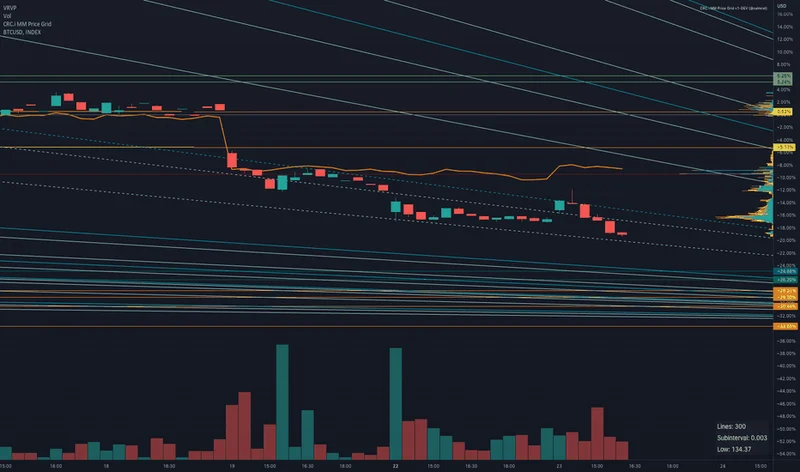
The initial spark seems to be Ran Neuner's suggestion that MSTR might face delisting from MSCI or NASDAQ. This was followed by Empery Digital accusing JP Morgan of bearish behavior toward MicroStrategy, specifically citing a quiet increase in MSTR margin requirements on July 7. The claim is that this triggered volatility, forced liquidations, and ultimately, a lower MSTR price.
Now, it's easy to jump on the bandwagon and blame a big bank. But let's look at the numbers. JP Morgan allegedly raised margin requirements. Did this cause the crash, or simply exacerbate an existing vulnerability? Correlation isn't causation, as any seasoned analyst knows. The fundamental question is: How much of MSTR's value is tied directly to Bitcoin's price fluctuations?
MSCI's potential decision to exclude companies with over 50% of their balance sheet in crypto assets from its global indexes throws another wrench into the works. JP Morgan estimates this could trigger $2.8 billion in outflows from MSCI-tracking funds. That's a substantial figure. And the prospect of MicroStrategy being removed from the MSCI USA index and potentially even the Nasdaq-100 is, to put it mildly, concerning for long-term investors.
Michael Saylor's response—that MicroStrategy is more than just a Bitcoin play, citing a $500 million software business—is a classic PR move. (Whether it's accurate is another question entirely.) He's trying to decouple the company's value from the volatile crypto market, but the market isn't always swayed by corporate narratives.
The Boycott Movement: A Symptom of Deeper Concerns
The call for a JP Morgan boycott, amplified by figures like Adam B. Liv and Grant Cardone (who claims to have withdrawn $20 million from Chase), is more symbolic than practically damaging to JP Morgan. What it does highlight is the deep-seated distrust many in the crypto community have toward traditional financial institutions. JP Morgan Faces Boycott Calls After MicroStrategy’s MSTR Stock Crash: Story Explained
The community's reaction, while impassioned, needs context. How many of those calling for a boycott are actually JP Morgan customers with significant assets? What percentage of JP Morgan's total customer base does this represent? These are the questions that would truly tell us the scope of the damage.
The potential MSCI rule change—excluding companies with substantial crypto holdings—is a real threat to MicroStrategy. If MSCI proceeds, any company with over 50% of its balance sheet in crypto could lose index status, forcing them to reduce their crypto holdings to maintain access to passive capital flows.
I've looked at hundreds of these cases, and what I find genuinely puzzling is the degree to which MicroStrategy has intertwined its fate with Bitcoin. It’s not just an investment; it’s a core part of their treasury strategy. Is this visionary, or reckless?
Is MicroStrategy's Fate Sealed?
The question is not simply whether JP Morgan acted nefariously (though that is what the crypto community seems to believe). The real question is whether MicroStrategy has built a sustainable business, or if it is now inextricably linked to Bitcoin's volatile dance. Saylor is betting on the former, but the market may ultimately decide it's the latter. And if MSCI follows through with its plans, the market may have a point. It seems the fate of MSTR stock price is tied to Bitcoin's future.
So, What's the Real Story?
The market is signaling a clear message: MicroStrategy's heavy reliance on Bitcoin is a risk factor, not a strength. Saylor's software business needs to demonstrate its value, not just claim it. Otherwise, MicroStrategy will continue to be seen as a Bitcoin proxy, vulnerable to the whims of the crypto market and the decisions of institutions like MSCI.
Related Articles
QQQ's Cash Flow Crisis: What's Happening?
QQQ's Afternoon Hiccup: Is Allsopp Right About the Overvaluation? The Invesco QQQ Trust ETF (QQQ), a...

The QQQ ETF: A Clinical Look at Its Performance and Future Outlook
Is the 'Smartest AI ETF' Just a Tech Index in Disguise? There’s a headline making the rounds that’s...

macau: What's Really Going On
Alright, let's get this straight. Macau's diversifying? Oh, really? Give me a break. It's not divers...
Netflix's 10-for-1 Stock Split: The Official Rationale vs. The Mathematical Reality
Netflix just announced a ten-for-one stock split, and the official press release reads like a corpor...

guangzhou: What's Happening?
China's Flying Car Factory: The West Was Asleep at the Wheel (Again) So, we're all supposed to be wo...

US Approves Nvidia Sales to UAE: An Analysis of the G42 Deal and Its Geopolitical Implications
It’s a familiar ritual for anyone in this business. The pre-market hum, the first cup of coffee, and...