OECD: What the Hell Is It, and Should We Trust Their AI & Data 'Vision'?
The OECD's Latest 'Updates': Just More Lipstick on a Pig?
Alright, folks, Nate Ryder here, dragging myself back to the keyboard after another week of watching the global elite play their little games. The OECD just dropped a fresh batch of "updates" and "appointments," and if you're expecting some revolutionary shift, well, you ain't been paying attention. It's the same old song and dance, just with a slightly tweaked playlist. They want us to believe they're fixing things, making the world "fairer" and "more efficient." Give me a break.
The Taxing Truth About 'New' Guidance
First up, the big news from November 19th: OECD updates Model Tax Convention to reflect rise of cross-border remote work and clarify taxation of natural resources - OECD. The OECD's Model Tax Convention got a facelift. They're finally, finally getting around to clarifying how short-term cross-border remote work gets taxed. You know, that thing that's been happening for, what, five years now, thanks to a certain global pandemic? It’s like watching a sloth try to catch a bullet train. They're only now figuring out when your company's suddenly got a "taxable presence" because Brenda from accounting decided to work from her grandma's villa in Tuscany for a month. This isn't groundbreaking, it's just playing catch-up, and poorly, at that.
They talk about enhancing "tax certainty" and supporting "fair and efficient cross-border business taxation." My ass. What it really means is they've spent years behind closed doors, probably in some heavily carpeted room where the air smells of old money and stale coffee, trying to figure out how to keep the big corporations from completely dodging their dues while still making sure the small fry get squeezed. And let's not forget the "alternative provision for taxing income from natural resource extraction." Sounds super noble, right? "Particularly relevant for developing and resource-endowed economies." Call me cynical – offcourse I am – but that sounds an awful lot like a new rulebook for how the big boys can continue to pull oil, gas, and minerals out of the ground in poorer nations, while giving them just enough scraps to keep the peace. Is this really about equity, or just formalizing the existing power dynamic under a new guise? I’m betting on the latter. It’s like giving a hungry man a recipe for a feast, but all the ingredients are locked in your pantry.
Shuffling the Deck Chairs on the Titanic of Bureaucracy
Then we got the new appointments on November 18th: OECD appoints František Ruzicka and Yasushi Masaki as new Deputy Secretaries-General - OECD. Look, I’m sure these guys are perfectly lovely human beings at a dinner party, but their resumes read like a checklist for "how to become an unshakeable fixture in global governance." Thirty-five years here, forty years there, ambassador to this, chief of staff to that. These aren't mavericks; they're career diplomats, the ultimate insiders. They've spent their entire professional lives navigating the labyrinthine corridors of power, which means they're experts at maintaining the status quo, not disrupting it.
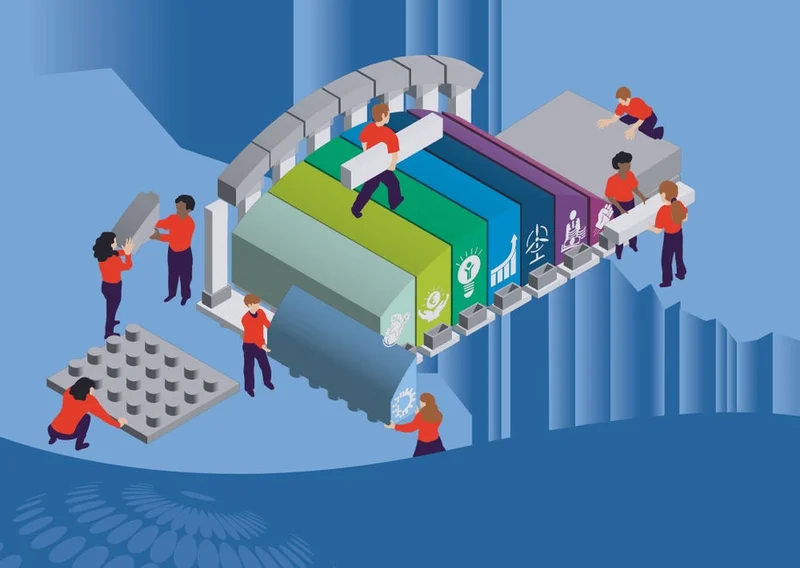
We're supposed to believe these appointments will "improve the economic and social well-being of people worldwide." Really? With all due respect to their decades of service, what exactly is going to change with two more seasoned bureaucrats in the mix? It’s like replacing two perfectly functional gears in a giant, slow-moving clock. The clock still ticks at the same glacial pace, doesn’t it? I mean, are we expecting them to suddenly burst through the doors on December 1st, overturning tables and demanding radical transparency? Not a chance. I can practically picture the scene: a polite handshake, a few murmured pleasantries, and then back to the endless cycle of reports, webinars, and committees. It's not a shake-up; it's a shuffle.
The Higher Ed Hustle: More Reports, Fewer Answers
And just to round out the week of "important" announcements, there's a report on "The Financial Sustainability of Higher Education" due out on November 24th. Oh, joy. Another deep dive into why college costs an arm and a leg, and how to keep the whole house of cards from collapsing. This has been a "long-standing concern" in OECD countries, which is just fancy talk for "we've been screwing over students for decades, and now it's getting awkward."
They're going to explore "how funding systems can influence the delivery of higher education objectives," focusing on "understanding costs, influencing revenue mix, and allocating public funding." Let me translate that for you: they're trying to figure out new ways to make universities look like they're worth the exorbitant tuition, while simultaneously finding more creative ways to extract money from taxpayers and students. Will this report actually ask the hard questions about administrative bloat, or the actual value of a degree in a rapidly changing economy? Or will it just recommend some clever accounting tricks to keep the gravy train rolling? My money's on the latter. It's not about fixing the problem; it's about managing the optics. Then again, maybe I'm just too cynical. Maybe this time, this time, they'll actually get to the bottom of it all... but I wouldn't hold your breath.
Just Another Day in the Echo Chamber
Related Articles

Major Candy Company Files for Chapter 11: The Real Reason Why and What the Filing Data Shows
The Bitter Math That Melted a Candy Empire The announcement on October 24th was, on its surface, jus...

Scott Bessent's 'Soybean Farmer' Routine: A Masterclass in Cringey, Insulting Pandering
Give me a break. I just read that Treasury Secretary Scott Bessent, a man whose net worth Forbes clo...
The Fed's Big Rate Cut Promise: And the Mess It Made for Your Mortgage
So the Fed finally did it. They cut the interest rate. You can almost hear the champagne corks poppi...

Wendy's Closing Hundreds of Restaurants: What We Know and Why I'm Not Surprised
Title: Wendy's Closures: "Project Fresh" or Just Another Fast-Food Apocalypse? Alright, so Wendy's i...

Southwest Airlines Overhauls Its Seating Policy: What This Means for Travelers and the Future of Flying
For decades, flying Southwest Airlines felt like stepping into a time capsule. The open seating, the...

Spotify's AI Music Initiative: The Strategy, Industry Impact, and What 'Responsible AI' Really Means
Spotify's AI Alliance Isn't About Ethics. It's About Building a Moat. The press releases read like a...